
23 Nov, 2026
For a 150 mm slab, the armour joint should be about 130 mm tall. Take 20 mm off the slab thickness and you have the number. That gap is the first rule we follow at Surya Engineering, an armour joint manufacturer in India, and it explains why armour joints are not considered suitable for 100 mm slabs and why a 2 mm error at the joint top counts as a defect.
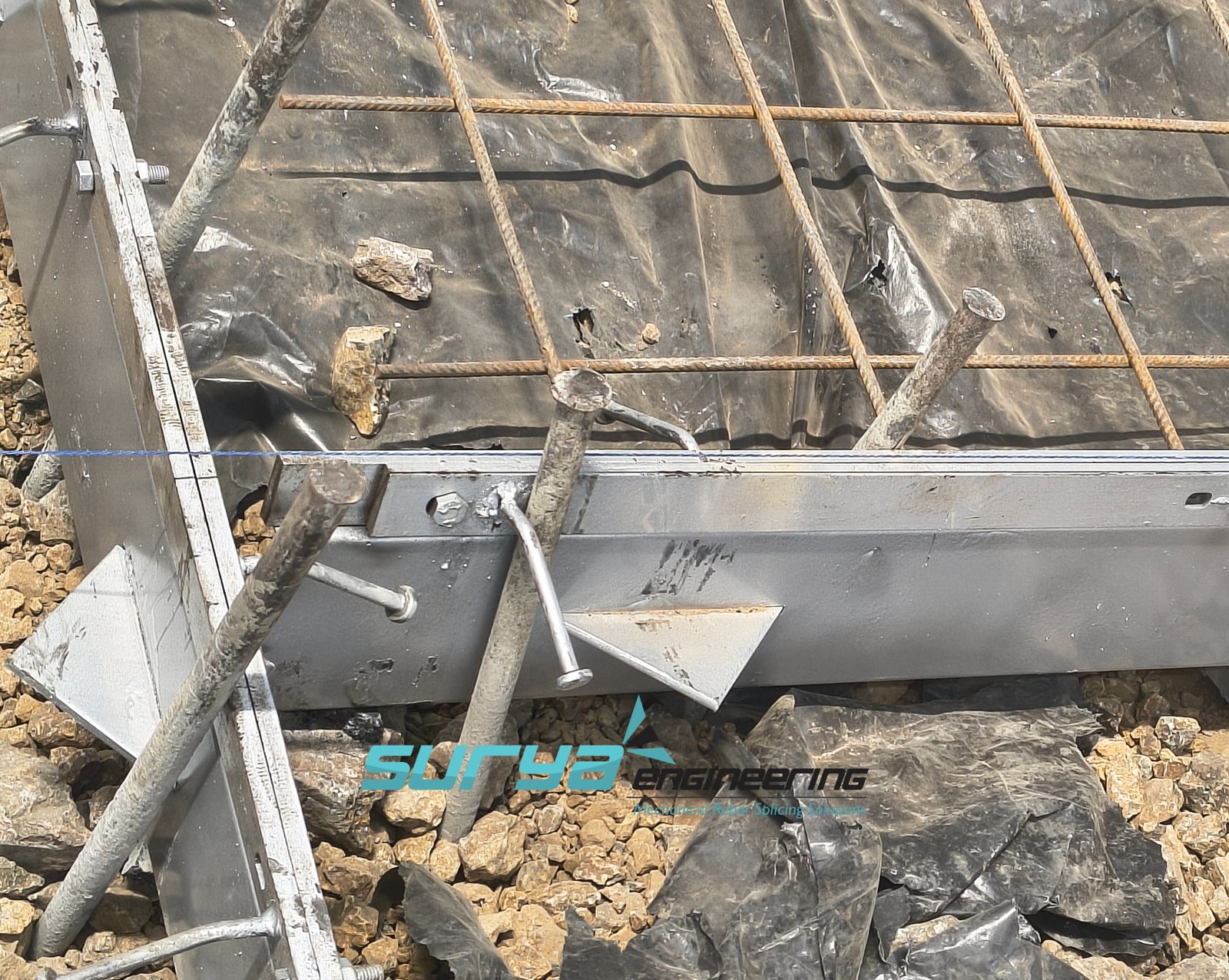
An armour joint is the steel edge you see at a construction joint on a warehouse or cold store floor. Leviat describes its version as leave-in-place formwork that also protects the slab edge and transfers load, built from two top strips, a divider plate, plate dowels and sleeves. Forklifts and pallet trucks cross these joints all day, and the steel edge takes the knocks that bare concrete cannot.
The 20 mm is working room. Crews need space to bring the top strip to the finished floor level, and a joint cut to the full slab depth leaves them none. So we size from the slab downward.
The 20 mm is working room. Crews need space to bring the top strip to the finished floor level, and a joint cut to the full slab depth leaves them none. So we size from the slab downward.
| Slab thickness | Joint height we recommend | Dowel plate thickness |
|---|---|---|
| 150 mm | about 130 mm | 6 mm |
| 175 mm | 155 to 160 mm | 6 to 8 mm |
| 200 mm | 175 to 180 mm | 8 mm |
| Above 200 mm | slab thickness minus 20 mm | 10 mm |
The 175 mm row sits on a boundary, so the load design decides the plate. Slabs in India are usually quoted in inches: small-scale industry often pours 4 inch floors, while warehouses and cold storage go to 6, 8, 10 or 12 inch. Six inch is close to 150 mm and eight inch close to 200 mm. Standard length is 2.5 metres, and trade listings in India show heights anywhere from 100 mm to 300 mm.
Surya's top strip is MS bright bar, 40 x 10 mm. It starts as cold-drawn black bar and is then brightened, and that finishing step is the point: it gives a smooth, flat surface, and the joint is only as good as how flat that surface sits against the screed. The bar comes from Vizag Steel, Tata or Jindal.
Tolerance at this scale is tight everywhere. Permaban's published specification for one of its joints lists a height tolerance of plus or minus 1 mm. At Surya, a variation of 1 or 2 mm at the top of the joint counts as a miss.
A 10 x 100 mm shear stud anchors the strip into the concrete and helps the concrete flow around it during the pour. A 2 mm HR or CR sheet below the top bar holds the height.
This is the part of an armour joint that does the structural work. Square and diamond dowel plates are both common. Surya's plates are welded to the joint. Base sizes start at 100 x 100 x 6 mm and 110 x 110 x 6 mm, with 150 x 150 x 6 mm above them, and the size follows the load transfer calculation for the slab.
The reference most designers use is the Concrete Society's TR34, and Leviat's data sheet shows how dowel shear and bearing capacity are worked out from its equations. The plate gets thicker as the slab gets deeper, from 6 mm up to 10 mm.
Each plate sits in a sleeve so it can slide as the joint opens. Peikko explains the same idea: high-strength plate dowels moving inside rigid plastic release sleeves.
Rust is the slow killer here, because the dowel lives inside the slab where nobody can inspect it. So we hot-dip galvanise the plates after cutting. The process takes about two days, with the steel dipped and then held at high temperature until the coating sets. Plain plating after cutting is the other option.
Two joint halves have to come apart as the slab shrinks. Concrete shrinks while it cures, and a joint that cannot open pushes the stress somewhere else. Peikko notes that a free-movement joint is there to stop the random cracking that can happen during curing and shrinkage.
We hold the halves with 10 x 40 mm nylon bolts with nylon nuts and washers. They let go slowly as the concrete moves, and the gap should open somewhere between 5 and 15 mm. Leviat's data sheet lists a nylon frangible fastener in the same role.
A mild steel bolt looks like the sturdier choice, which is why people reach for it. It also locks the joint shut. If the gap cannot open, the design has failed, whatever the drawing says.
Compare quotes on specification, not on price per unit. The listings I found quote the same product by the piece, by the metre and even by the millimetre, so a lower number on a quote often means a shorter joint, a thinner bar or a different fastener. Ask for these five things in writing: joint height against your slab thickness, top bar section, dowel plate thickness, coating (hot-dip or plated) and the bolt material.
Corners are the other thing to settle early. At T-joints and at three-way or four-way junctions, we cut the armour joint and form the corner from the cut sections.
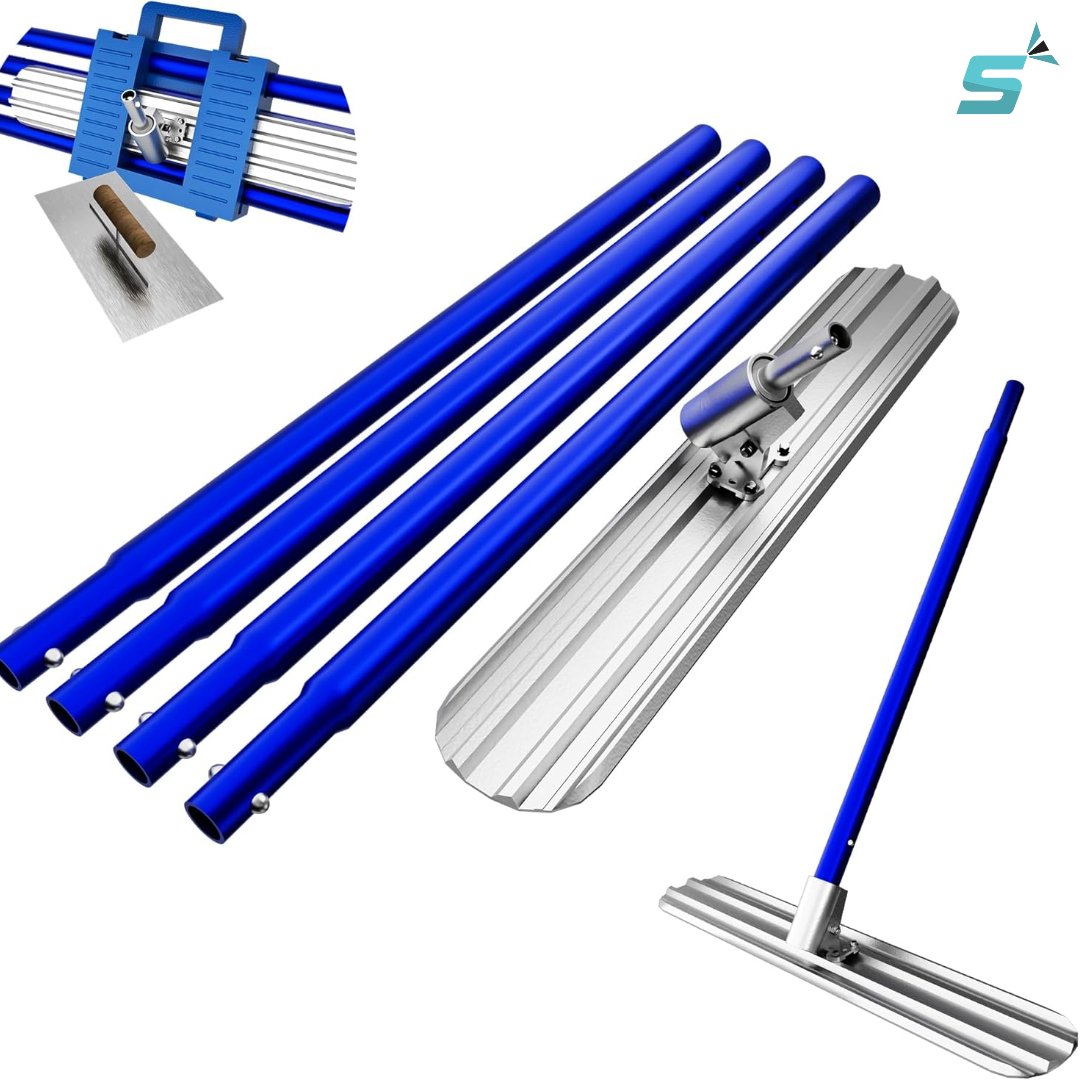
When a client orders from us, we stay responsible until the joint is installed. Site layouts change after the design team reviews them, so we send our own engineer with a levelling tool and gauges. The engineer trains your crew on the spot.
The target is zero variance at the top of the joint, flush with the finished surface. On large pours the laser screed does much of the levelling, and if a client is buying that machine we point them to Somero.
If your joints come from another vendor, call us anyway. We will answer technical questions on any supplier's armour joint, whoever made it.
Before you order, send Surya Engineering your slab thickness, the traffic load and your joint layout drawing. With those we can give you the joint height, the dowel plate and the number of corner pieces.
LEAVE A COMMENT
Testin Rahul
21 Nov, 2026 - By Surya Engineering
SURYA MBT COUPLER
22 Aug, 2025 - By Surya Engineering

WHAT KIND OF TESTING IS PERFORMED ON ...
22 Nov, 2024 - By Surya Engineering